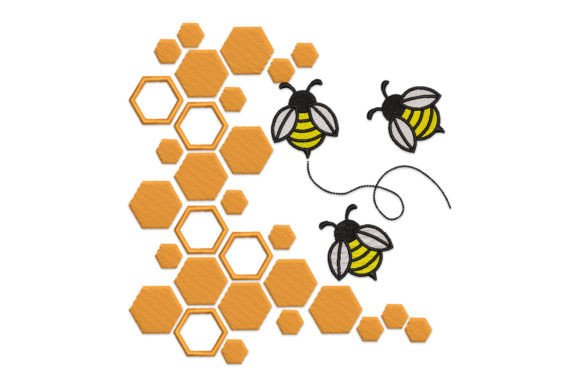
Honeycomb Bees Embroidery Design Review
As a designer who has spent years navigating the delicate balance between digital files and physical thread, I approach every new machine embroidery design with a critical eye. When I first opened the file for Honeycomb Bees, my immediate goal was to determine if this intricate depiction of nature could translate into a high-quality finished product. The description promises charming and detailed views of industrious insects, but in our line of work, "charming" often hides complex stitching challenges. This review breaks down how Honeycomb Bees performs when moved from the screen to the hoop, specifically for those of us building a craft business or creating personalized gifts.
First Impressions: Visual Personality and Mood
The initial visual impact of Honeycomb Bees is warm and inviting. The layout centers on the honeycomb structure, which acts as a natural frame for the bees. For an Etsy seller or boutique owner looking to create a cohesive brand identity, this design offers a distinct aesthetic that leans towards organic, rustic, and eco-friendly themes. The level of detail suggests it is not merely a simple outline but a piece intended to showcase texture through thread.
However, the intricacy of the hexagonal patterns requires careful consideration. In a digital preview, the lines look crisp, but in reality, the success of this design depends heavily on stitch density. If the fill stitch is too tight, the fabric may pucker; too loose, and the definition of the comb cells will be lost. The design feels like it belongs on items where the customer expects a premium, handmade touch, such as a high-end kitchen towel set or a nursery wall hanging.
Real-World Application: From Tote Bags to Apparel
To truly test the viability of Honeycomb Bees, I imagined using it for a custom tote bag design intended for a local farmer's market stall. The sturdy canvas of a tote bag provides an excellent foundation for this type of Bugs themed artwork. The geometric nature of the honeycomb complements the weave of the fabric, creating a tactile experience that customers love to touch.
I also considered its application on sweatshirt embroidery. Placing this design on the left chest of a crewneck would offer a subtle yet professional look for a small shop product line. The scale of the bees relative to the comb allows for flexibility; you can use the full motif for a statement piece or isolate a single bee for a smaller accent. For baby embroidery, the soft curves of the bees make it suitable for onesies, provided the stabilizer is chosen correctly to prevent stiffness around the neckline.
In the context of holiday gifting, Honeycomb Bees fits perfectly into autumn and spring collections. Imagine this stitched onto a linen pillow cover or an apron for a wedding gift. The imagery evokes sweetness and industry, making it a thoughtful choice for bridal showers or housewarmings. As a digital product seller, offering this as part of a bundle for other makers could increase buyer engagement, provided the file quality supports commercial reproduction.
Navigating Fabric Challenges and Placement
While the design is versatile, there are specific scenarios where caution is required. Honeycomb Bees features fine details that can get lost on highly textured fabrics like heavy corduroy or thick fleece. On these materials, the running stitch outlines might blend into the fabric pile, reducing the clarity of the final image. Similarly, on stretchy fabrics like jersey knit, the tension required to hold the intricate shapes can cause distortion if the wrong stabilizer is used.
For curved surfaces, such as caps or hats, the rigid geometry of the honeycomb presents a challenge. The flat angles of the comb cells do not naturally conform to a dome shape without significant manipulation, which can lead to puckering or thread breakage. It is best reserved for flatter areas of a garment or used as an embroidered patch that is sewn on later rather than embroidered directly onto the curve.
Dark fabrics require another layer of planning. The light yellow tones typically associated with honeycombs need strong contrast against black or navy backgrounds. Without a backing layer or careful selection of thread colors, the design may appear muddy. Always test the design in black and white mockups first to ensure the value range works before committing to expensive thread and fabric.
Impact on Product Value and Brand Trust
Using a well-executed design like Honeycomb Bees elevates the perceived value of a handmade product. Customers associate clean, dense stitching with professionalism. When the fill stitch lies flat and the satin stitch edges are smooth, it signals that the maker cares about quality. This attention to detail builds customer trust, which is crucial for repeat business in a competitive marketplace.
Conversely, if the design is rushed or improperly stabilized, the result can look amateurish. Puckering around the hexagons or skipped stitches in the bee wings can ruin an otherwise beautiful item. For a craft business, consistency is key. Every finished product must meet the same standard to maintain brand integrity. This design offers a great opportunity to demonstrate skill, but only if the technical execution matches the artistic vision.
Practical Designer Notes for Success
Before running Honeycomb Bees on your machine, follow these essential steps to ensure a flawless outcome:
- Test on Scrap Fabric: Never skip the test run. Stitch the design on a scrap of the exact fabric you plan to use. Check for puckering, thread breaks, and color accuracy.
- Verify Hoop Size: Ensure your hoop can accommodate the full width and height of the design without distorting the pattern. If the design is larger than your hoop, consider splitting it into sections.
- Select the Right Stabilizer: For dense areas like the honeycomb, a cut-away stabilizer often provides better long-term support than tear-away, especially on apparel that will be washed frequently.
- Check Thread Contrast: Compare your thread colors against the fabric swatch under different lighting conditions. What looks good in daylight might disappear under store lighting.
- Inspect Small Details: Zoom in on the digital file to check for tiny gaps or overlapping lines that could cause thread jams during stitching.
- Confirm Licensing: Before selling any items made with this commercial embroidery file, verify the license terms. Some designs allow personal use only, while others permit unlimited sales of finished goods.
Ultimately, Honeycomb Bees is a strong contender for designers looking to add a touch of nature-inspired elegance to their portfolio. It bridges the gap between whimsical charm and professional utility. Whether you are decorating a custom apparel line, creating a unique personalized gift, or expanding your catalog of design assets, this file offers a solid foundation. By respecting the technical requirements of the Embroidery process and testing thoroughly, you can transform this digital file into a tangible product that delights customers and strengthens your brand.